
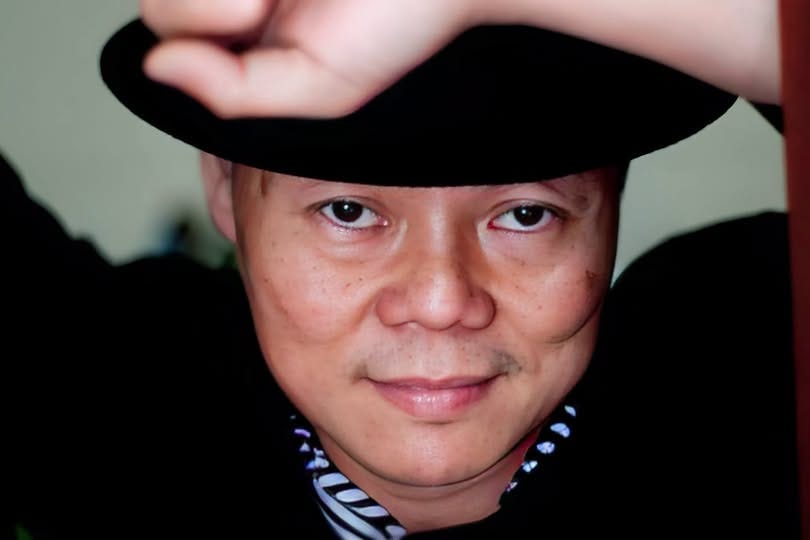
On the morning of August 3rd, as the Hanoi People’s Court prepared to sentence journalist and martial‑arts instructor Đoàn Bảo Châu to seven years in prison for “anti‑state propaganda,” the defendant was nowhere near the courtroom. He wasn’t even in Vietnam. I first noticed his name a year and a half ago, in January 2025, when he briefly flickered across the news as a wanted man — a truthteller with a foreign‑media past and a byline in the New York Times. That stopped me cold. If he’d worked for the almighty NYT — or AP, Reuters, any of the usual suspects — surely someone in the Hanoi’s foreign press would have written something. But no one did. No arrest, no confirmation, no follow‑up. Maybe they just wanted to scare him off before the XIV Communist Party Congress. And then: silence.
Last week he reappeared — on his popular Facebook page with more than 225,000 followers — laughing at a court summons demanding he present himself for trial under Article 117. Laughing, because he was long gone. He had slipped out of Vietnam, resurfaced in Canada as a political refugee, and was now speaking freely from exile. And today, as judges in Hanoi read out his sentence to an empty chair, he livestreamed his defence from abroad.
He has become Vietnam’s Count of Monte Cristo — a man who escaped the dungeon before the jailers even realised he was gone. For a year he was a rumour, a name that flickered and then disappeared. And now he’s back, speaking freely from Canada, mocking the summons from a country where he no longer lives in, while the court in Hanoi performs its ritual of punishment for an audience of ghosts.
In his livestreamed defence on Facebook, Châu calmly dismantled the entire case against him. He said he never called for violence, never urged anyone to oppose the State, and never distorted facts. Every video he posted, he noted, used publicly available information — much of it from official Vietnamese sources. He pointed out that the Ministry of Public Security itself had certified his clips as “intact,” meaning they were not edited or manipulated. His argument was simple: If the facts are true and the sources are official, how can repeating them be a crime?
He insisted that his purpose was not to attack the State but to encourage transparency, accountability, and lawful governance — values the Constitution itself claims to uphold. He reminded the court that Vietnamese citizens have the right to express opinions peacefully, and that criticism is not sabotage. He said he had no organisation, no network, no political agenda, and no intention to undermine national security. His videos, he argued, were commentary — not propaganda — and he asked the judges to explain precisely which sentence, which word, which idea constituted a threat to the State.
Finally, he asked the court to follow the law rather than the indictment. He requested a cassation review, cited specific articles of the Penal Code, and challenged the prosecution to show evidence of harm — any harm at all. They couldn’t. And so, from Canada, he delivered a defence that was calm, legalistic, and devastating: If telling the truth is a crime, then the problem is not the truth — it’s the law.
According to the indictment, the “cases” against Châu were stitched together from a small set of Facebook videos he posted between late 2023 and 2024. In them, he criticised corruption, questioned the handling of high‑profile scandals, and urged officials to follow the Constitution and existing laws. Some focused on specific incidents: a prison camp where inmates were denied electric fans in the summer heat; the bloody Đồng Tâm land dispute of 2020–21; Vietnam’s human rights record in Geneva; another domestic rights case that had quietly disappeared from State media; the almost absurd illegal road‑toll station that locals had protested for years; even the catastrophic floods that hit central Vietnam in 2016. None of this was secret, none of it was organised, and most of it relied on publicly available information — much of it from State media itself. Yet each clip was treated as a separate “anti‑State” offence under Article 117, bundled together to justify a seven‑year sentence for a man who was no longer in the country.
It’s hard not to see these cases as part of a broader tightening — a clearing of the decks before the To Lam era accelerates toward 2045, the year Vietnam is meant to reach high‑income developed‑country status. And don’t question the mythology: last month Hanoi loudly withdrew a humanising book on Ho Chi Minh by a loyalist author, then slapped him with a 117 too. At the same time, a host of new, often incomprehensible regulations, controls and fines have appeared — small rules, petty restrictions, bureaucratic tripwires that seem designed less to govern than to remind everyone who governs.
And just last week, a single mother of an autistic son, Hoàng Thái Hoàng, was sentenced in Hanoi for posting what amounted to common‑sense observations online. Article 117 has become the State’s catch‑all for dissent, a law so elastic it can stretch to cover nearly everything. The message is unmistakable: the new era will tolerate no loose ends.
I wonder if the foreign media will cover this now.